Saturday, June 29, 2019

Boycott by Whites of South African Restaurant Reflects Growing Sense of Grievance - The New York Times

STRAND, South Africa — For many white children growing up in apartheid South Africa, the Spur Steak Ranches restaurant chain was a home away from home, offering kid-friendly meals and play areas with an American Wild West theme.

For their parents, the chain’s outposts served as the social center in many rural towns and in suburbs like Strand, a once-popular beach resort about 30 miles from Cape Town.

“A lot of people thought of Spur as their living room,” said Johan Pienaar, a brand consultant.

But some of Spur’s most ardent fans have been staying away, supporting a boycott now entering its third year that has highlighted the underlying racial tensions in South African society.

The former patrons speak in emotional terms of a betrayal by a cherished brand, whose outposts were effectively barred to blacks during apartheid because of their locations in whites-only areas.

“I’ll never set foot inside that place again,” said Keith van Eeden, who lives in Strand and was a loyal Spur customer for more than three decades, religiously taking his three children there on their birthdays.

“Spur is only for blacks now,” Mr. van Eeden added. “They don’t want the whites.”

The boycott began in 2017 when Spur sided with a black woman who was in a confrontation with a white man at a franchise in Johannesburg. But the continuing campaign against the chain — promoted by South Africa’s most prominent groups that advocate white-minority rights — reflects something more profound than lingering bitterness over that dispute.

It’s a demonstration of a strong, and what appears to be a growing, sense of resentment among many white South Africans a quarter of a century after they lost political power, and the outrages and brutalities of apartheid were ended.

In the May general elections to elect a new National Assembly, the party that enjoyed the biggest increase in its share of the vote was Freedom Front Plus — a small Afrikaner party fighting to repeal affirmative action policies for black South Africans. The party also opposes the African National Congress’s policy of expropriating white-owned land without compensation, which is not yet law.

In the fight that started the boycott, caught on videos that went viral, the two customers are seen arguing over the behavior of their children. The white man yanks the arm of a black boy, before threatening to hit the black woman and trying to overturn a table where her small children were sitting.

A few days later, Spur issued an apology to the woman and banned the man for his “aggressive manner” and “unacceptable” actions.

Conservative whites were outraged, with many saying both customers should have been banned. The boycott push took on momentum when white-minority lobbying groups got involved. One was AfriForum, which has drawn widespread criticism for its views, including its recent denial that apartheid was a crime against humanity.

Image
CreditJoao Silva/The New York Times

The Spur boycott resonated the most among white, working-class Afrikaners like Mr. van Eeden who, while living in a country where whites still disproportionately control the economy, feel resentful about having lost out in the democratic South Africa.

Mr. van Eeden, who runs a rubble removal service in Strand, a stronghold of Afrikaners, said that when apartheid ended, he “wasn’t very happy about it.”

He no longer believes that South Africa is a country for people like him. “If we had money,” he said, “we’d have got out.”

A restaurant chain’s banning of one man for aggressive behavior would hardly seem the sort of perceived grievance to give rise to an impassioned movement, especially in a country where a large majority suffered extreme injustices for decades.

And these complaints about white marginalization do lead to “an eye roll” among many black South Africans, said Wamuwi Mbao, a literary critic and lecturer at Stellenbosch University, who writes about race and identity.

But for many whites, the banning represented a larger symbolic loss. And the breadth and duration of this boycott, whose success caught many by surprise, showed just how many whites were committed to protesting their sense that a cultural touchstone had forsaken them.

Within six months of the boycott, Spur’s nationwide sales dropped by more than 9 percent. That overall dip concealed even deeper losses at the chain’s restaurants in predominantly white areas.

“Nobody in South Africa thought a boycott could be this effective,” said Johan Pienaar, a brand expert, who consulted with Spur on how to manage the protest but no longer works on the chain’s behalf. Spur, he added, was “suddenly being boycotted by the very people they’ve been cultivating as customers for years.”

Arthur Peace, whose family owned two Spur franchises in the predominantly white suburbs north of Cape Town, said business was devastated by the boycott. He had to sell one of the restaurants.

“You go from being O.K. into the red zone within a month,” he said. Mr. Peace recalled regular customers telling him, “‘We love you guys, but we’re just not supporting the brand.’”

The scope and intensity of the boycott, Mr. Peace said, showed just how much anger there was in the nation.

Founded in 1967, Spur helped introduce American-style casual dining to South Africa at a time when the country’s racial policies were increasingly making it an international pariah. Franchises spread quickly, and the chain became one of the country’s most recognizable brands.

During apartheid, Spur did not have an official policy of segregation, said Moshe Apleni, a company spokesman.

Image
CreditWikus De Wet for The New York Times

But black South Africans were effectively barred from Spur restaurants because they were located in cities and towns restricted to white citizens.

The company’s chief operating officer, Mark Farrelly, said in a radio interview at the height of the boycott in 2017 that the company was facing a “rabid right-wing backlash.” He pointed out that the hardest-hit franchises were located in former strongholds of the Conservative Party, the right-wing party that had opposed the end of apartheid.

In response, the leader of an influential white-minority trade union, Solidarity, wrote in an open letter: “This is about a community that feels estranged in the country. Now, they feel strange in their favorite restaurant as well.”

Since apartheid’s end, Spur, just like supermarkets, department stores and other businesses that once catered largely to white customers, has had to adapt to South Africa’s inexorably changing demographics.

Its white population, now around 8 percent, is shrinking; for all the country’s deeply rooted income inequality, the share of middle-class black consumers is growing.

Black South Africans now account for about 65 percent of the customers at the nation’s more than 280 Spur franchises, according to an internal report prepared for the company.

But individual franchises still depend heavily on white customers.

Sales have slowly recovered nationwide. But business is still not back to normal at some locations, including Mr. Peace’s remaining store, where he said eight families were staying away.

On a recent Saturday afternoon, the Spur franchise in Strand was half full, with equal numbers of whites, blacks and people of mixed race.

At one table near the play area, a group of young black children sat with their mothers. Waiters had just stomped and clapped through a birthday song.

Anelisa Nqevu had arranged the party for her daughter, who was turning 8. They lived in Khayelitsha, Cape Town’s largest township, some 11 miles away.

“Each time I go shopping, she wants me to take her to Spur,” Ms. Nqevu said, her daughter standing nearby.

Despite all the furor around the boycott, Ms. Nqevu said she didn’t feel any racial tension at the restaurant.

“Everyone is welcome there now — black or white,” she said.
Let's block ads! (Why?)

https://www.nytimes.com/2019/06/29/world/africa/south-africa-spur-boycott.html 2019-06-29 10:20:04Z
Share:

Boycott by Whites of South African Restaurant Reflects Growing Sense of Grievance - The New York Times

STRAND, South Africa — For many white children growing up in apartheid South Africa, the Spur Steak Ranches restaurant chain was a home away from home, offering kid-friendly meals and play areas with an American Wild West theme.

For their parents, the chain’s outposts served as the social center in many rural towns and in suburbs like Strand, a once-popular beach resort about 30 miles from Cape Town.

“A lot of people thought of Spur as their living room,” said Johan Pienaar, a brand consultant.

But some of Spur’s most ardent fans have been staying away, supporting a boycott now entering its third year that has highlighted the underlying racial tensions in South African society.

The former patrons speak in emotional terms of a betrayal by a cherished brand, whose outposts were effectively barred to blacks during apartheid because of their locations in whites-only areas.

“I’ll never set foot inside that place again,” said Keith van Eeden, who lives in Strand and was a loyal Spur customer for more than three decades, religiously taking his three children there on their birthdays.

“Spur is only for blacks now,” Mr. van Eeden added. “They don’t want the whites.”

The boycott began in 2017 when Spur sided with a black woman who was in a confrontation with a white man at a franchise in Johannesburg. But the continuing campaign against the chain — promoted by South Africa’s most prominent groups that advocate white-minority rights — reflects something more profound than lingering bitterness over that dispute.

It’s a demonstration of a strong, and what appears to be a growing, sense of resentment among many white South Africans a quarter of a century after they lost political power, and the outrages and brutalities of apartheid were ended.

In the May general elections to elect a new National Assembly, the party that enjoyed the biggest increase in its share of the vote was Freedom Front Plus — a small Afrikaner party fighting to repeal affirmative action policies for black South Africans. The party also opposes the African National Congress’s policy of expropriating white-owned land without compensation, which is not yet law.

In the fight that started the boycott, caught on videos that went viral, the two customers are seen arguing over the behavior of their children. The white man yanks the arm of a black boy, before threatening to hit the black woman and trying to overturn a table where her small children were sitting.

A few days later, Spur issued an apology to the woman and banned the man for his “aggressive manner” and “unacceptable” actions.

Conservative whites were outraged, with many saying both customers should have been banned. The boycott push took on momentum when white-minority lobbying groups got involved. One was AfriForum, which has drawn widespread criticism for its views, including its recent denial that apartheid was a crime against humanity.

Image
CreditJoao Silva/The New York Times

The Spur boycott resonated the most among white, working-class Afrikaners like Mr. van Eeden who, while living in a country where whites still disproportionately control the economy, feel resentful about having lost out in the democratic South Africa.

Mr. van Eeden, who runs a rubble removal service in Strand, a stronghold of Afrikaners, said that when apartheid ended, he “wasn’t very happy about it.”

He no longer believes that South Africa is a country for people like him. “If we had money,” he said, “we’d have got out.”

A restaurant chain’s banning of one man for aggressive behavior would hardly seem the sort of perceived grievance to give rise to an impassioned movement, especially in a country where a large majority suffered extreme injustices for decades.

And these complaints about white marginalization do lead to “an eye roll” among many black South Africans, said Wamuwi Mbao, a literary critic and lecturer at Stellenbosch University, who writes about race and identity.

But for many whites, the banning represented a larger symbolic loss. And the breadth and duration of this boycott, whose success caught many by surprise, showed just how many whites were committed to protesting their sense that a cultural touchstone had forsaken them.

Within six months of the boycott, Spur’s nationwide sales dropped by more than 9 percent. That overall dip concealed even deeper losses at the chain’s restaurants in predominantly white areas.

“Nobody in South Africa thought a boycott could be this effective,” said Johan Pienaar, a brand expert, who consulted with Spur on how to manage the protest but no longer works on the chain’s behalf. Spur, he added, was “suddenly being boycotted by the very people they’ve been cultivating as customers for years.”

Arthur Peace, whose family owned two Spur franchises in the predominantly white suburbs north of Cape Town, said business was devastated by the boycott. He had to sell one of the restaurants.

“You go from being O.K. into the red zone within a month,” he said. Mr. Peace recalled regular customers telling him, “‘We love you guys, but we’re just not supporting the brand.’”

The scope and intensity of the boycott, Mr. Peace said, showed just how much anger there was in the nation.

Founded in 1967, Spur helped introduce American-style casual dining to South Africa at a time when the country’s racial policies were increasingly making it an international pariah. Franchises spread quickly, and the chain became one of the country’s most recognizable brands.

During apartheid, Spur did not have an official policy of segregation, said Moshe Apleni, a company spokesman.

Image
CreditWikus De Wet for The New York Times

But black South Africans were effectively barred from Spur restaurants because they were located in cities and towns restricted to white citizens.

The company’s chief operating officer, Mark Farrelly, said in a radio interview at the height of the boycott in 2017 that the company was facing a “rabid right-wing backlash.” He pointed out that the hardest-hit franchises were located in former strongholds of the Conservative Party, the right-wing party that had opposed the end of apartheid.

In response, the leader of an influential white-minority trade union, Solidarity, wrote in an open letter: “This is about a community that feels estranged in the country. Now, they feel strange in their favorite restaurant as well.”

Since apartheid’s end, Spur, just like supermarkets, department stores and other businesses that once catered largely to white customers, has had to adapt to South Africa’s inexorably changing demographics.

Its white population, now around 8 percent, is shrinking; for all the country’s deeply rooted income inequality, the share of middle-class black consumers is growing.

Black South Africans now account for about 65 percent of the customers at the nation’s more than 280 Spur franchises, according to an internal report prepared for the company.

But individual franchises still depend heavily on white customers.

Sales have slowly recovered nationwide. But business is still not back to normal at some locations, including Mr. Peace’s remaining store, where he said eight families were staying away.

On a recent Saturday afternoon, the Spur franchise in Strand was half full, with equal numbers of whites, blacks and people of mixed race.

At one table near the play area, a group of young black children sat with their mothers. Waiters had just stomped and clapped through a birthday song.

Anelisa Nqevu had arranged the party for her daughter, who was turning 8. They lived in Khayelitsha, Cape Town’s largest township, some 11 miles away.

“Each time I go shopping, she wants me to take her to Spur,” Ms. Nqevu said, her daughter standing nearby.

Despite all the furor around the boycott, Ms. Nqevu said she didn’t feel any racial tension at the restaurant.

“Everyone is welcome there now — black or white,” she said.

Let's block ads! (Why?)

https://www.nytimes.com/2019/06/29/world/africa/south-africa-spur-boycott.html 2019-06-29 09:40:28Z
Share:

Takeout makes people 'far more satisfied' than restaurant meals, report claims - Fox News

Next time you're trying to convince your partner or friend to order delivery instead out of going out to eat, know that you're not the only one yearning for takeout.

According to the latest Restaurant Report from the American Customer Satisfaction Index (ACSI,) which polls nearly 23,000 consumers, hungry folks who order food delivery report being “far more satisfied” than those who take their meal at a restaurant.

Published on Tuesday, the annual study reported that the increasingly popular trend of “off-premise dining” eclipsed that of traditional dining-in, Food & Wine reports.

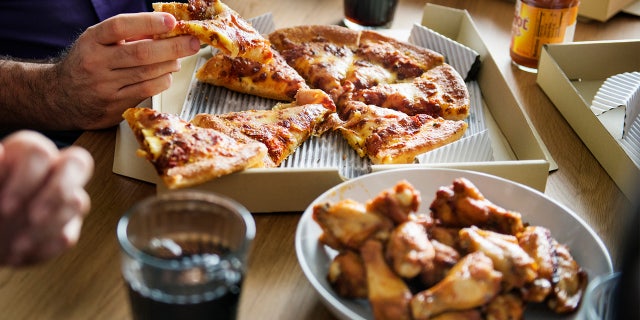
Hungry folks who order food delivery report being “far more satisfied” than those who take their meal at a restaurant, one annual study claims. 

Hungry folks who order food delivery report being “far more satisfied” than those who take their meal at a restaurant, one annual study claims.  (iStock)

OLIVE GARDEN PATRON CAPTURES PICTURE OF GROUNDHOG ENJOYING BREADSTICK

“ACSI data show that for the full-service segment, diners who order food for delivery are far more satisfied [83 on the ranking’s 100-point scale] than those who dine in [79 on the scale,]” the report read. “As foot traffic slows, off-premise dining — projected to account for 37% of restaurant industry sales in 2018 — plays an important role.”

Though the authors acknowledged that the statistic could be “pretty unsettling” for those in the restaurant business, this is hardly the first time that the concept of food delivery has been reported as trending, especially with the millennial set.

According to a February 2019 report from Restaurant Insider, a whopping 60 percent of American consumers order takeout meals or delivery once a week. 31 percent even dared to admit they ordered food from third-party delivery services at least twice weekly, while 59 percent of millennials said that when they're ordering from a restaurant, it's for takeout or delivery.

FOLLOW US ON FACEBOOK FOR MORE FOX LIFESTYLE NEWS

In other notable numbers from the latest and greatest ASCI report, Chick-fil-A has once again been named America’s favorite restaurant based on customer satisfaction.

For the fourth year running, the chicken-centric crowned the list for limited-service restaurant chains, beating out famous competitors McDonald’s, Burger King, KFC and Taco Bell.

CLICK HERE TO GET THE FOX NEWS APP

Let's block ads! (Why?)

https://www.foxnews.com/food-drink/takeout-satisfied-restaurant-meals-report-claims 2019-06-29 09:02:37Z
Share:

Friday, June 28, 2019

40代女性刺され死亡し30代夫が行方不明 「両親がもめている」と通報 - livedoor

40代女性刺され死亡し30代夫が行方不明 「両親がもめている」と通報  livedoor

東京・江戸川区のマンションで40代の女性が刃物で刺されて死亡しました。警視庁は、行方が分からなくなっている夫が事情を知っているとみて捜査しています。

Google ニュースですべての記事を表示
40代女性刺され死亡し30代夫が行方不明 「両親がもめている」と通報 - livedoor
続きを読む
Share:

自立促す手紙、ビリビリに 容疑者が反発か 川崎殺傷 - 朝日新聞

自立促す手紙、ビリビリに 容疑者が反発か 川崎殺傷  朝日新聞

川崎市多摩区の路上で5月28日、私立カリタス小学校の児童ら20人が殺傷された事件で、ひきこもり状態だった岩崎隆一容疑者(51)=事件直後に自殺=に対し、同居し ...

Google ニュースですべての記事を表示
自立促す手紙、ビリビリに 容疑者が反発か 川崎殺傷 - 朝日新聞
続きを読む
Share: